Venture Studio
Heylog
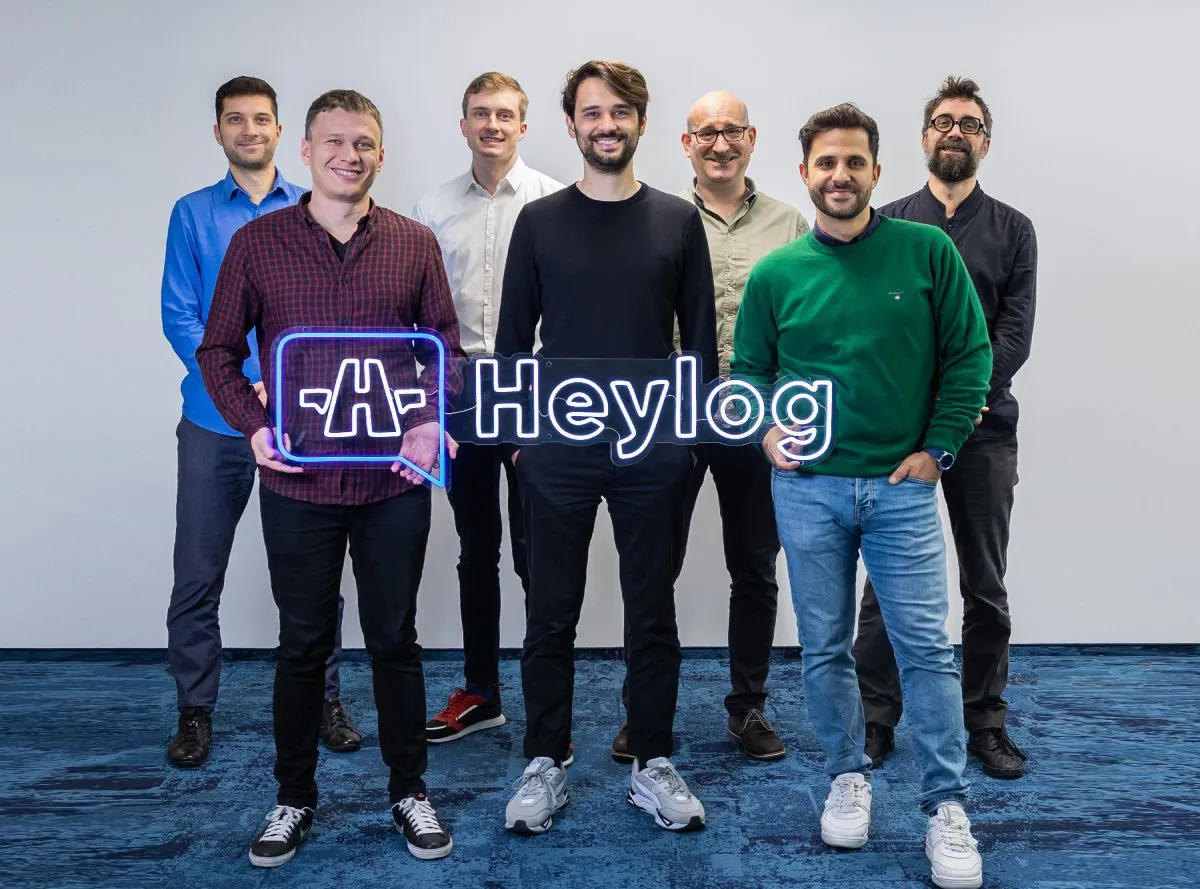
 Bernhard Hauser, Founder & CEO
Summary
- Communication and workflows between freight forwarders and drivers digitised – over WhatsApp and a web interface
- AI at the core of the product, for document processing, workflows and automatic translation into more than 13 languages
- Built from zero as a corporate venture, including product, team and sales structures
- €3.8M in funding from industry partners like Schmitz Cargobull and LKW WALTER
- From launch to first revenue in under six months
Heylog is a logistics-tech company from Vienna that digitises communication along the supply chain: freight forwarders reach their drivers directly on WhatsApp and similar messengers. Unstructured chats become structured workflows – from tour coordination to document exchange. Heylog is the first digital company in our portfolio. Preparation started in 2021, the company was founded with industry partners in April 2022 and funded with €3.8M from Schmitz Cargobull, LKW WALTER and 9.5 Ventures. First revenue was booked in under six months.
Overview
Heylog was the first digital company in our portfolio: founded together with industry partners and built from zero. The MVP solved a problem every freight forwarder knows, which is communicating with drivers while they are on the road.
The starting point
There is a gap between the dispatch desk and the cab. Phone calls interrupt the drive, email reaches nobody on the road and the forwarder’s systems do not extend into the vehicle. What does get through are messages over messaging services: drivers use WhatsApp on their own devices anyway and need no extra training for it.
Around 90% of drivers already use WhatsApp and similar messengers, while company-issued apps are installed less and less (own DACH logistics market research, 2022). Roughly 27 languages are spoken across the region’s logistics industry day to day (Dispo, 2022). On top of that sits a market of some €80bn handled by subcontractors (Statista, 2019).
Messaging services are already in use between some companies and their drivers, but that solves no language barriers, allows no structured exchange across teams and does not answer the data protection question either. On top of that, messages like these happen detached from the transport management system (TMS), so nothing is logged in a way that can be traced back to an order.
The solution
The goal of the market-entry product (MVP) was exactly that connection: communication with drivers on the road over WhatsApp and comparable messaging services, wired into the forwarders’ transport management systems and extended with AI-based workflows. The approach deliberately met drivers where they already were, instead of asking for yet another app that nobody opens during a shift.
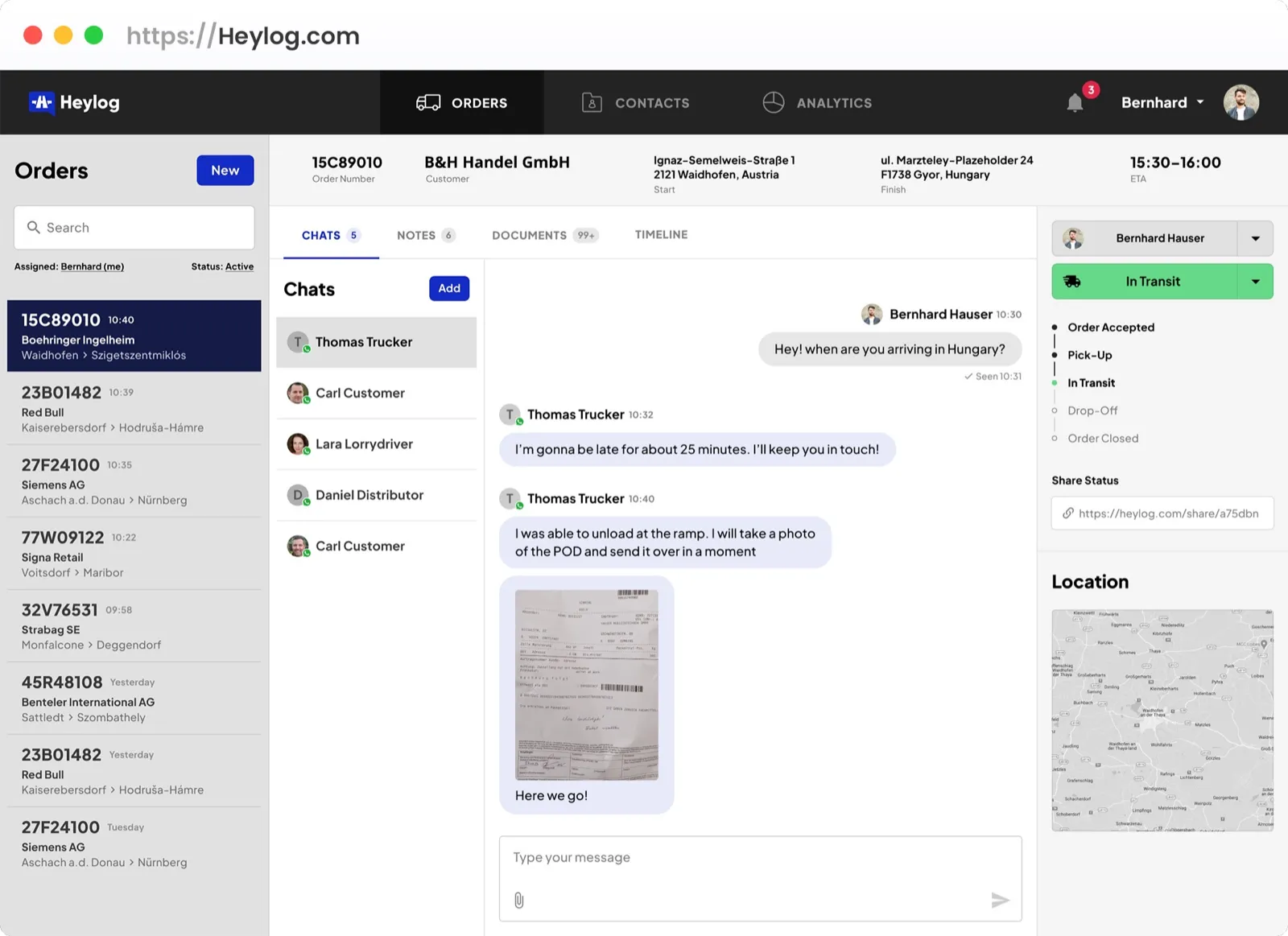
On the dispatch side everything came together in one screen: running conversations, orders, documents and the status of a trip. For drivers, nothing changed – WhatsApp, Facebook Messenger or Viber on their own phone, with nothing to install.
We use Heylog every day. It makes our working day enormously easier.
Running tours, even without an integration
Heylog worked as a standalone, web-based application. A forwarder could create and run orders and tours directly in Heylog, even without connecting their TMS first. That was a deliberate decision, because TMS integrations are complicated and drawn out, and the smaller forwarders who feel the problem most have neither the budget nor an IT department for one.
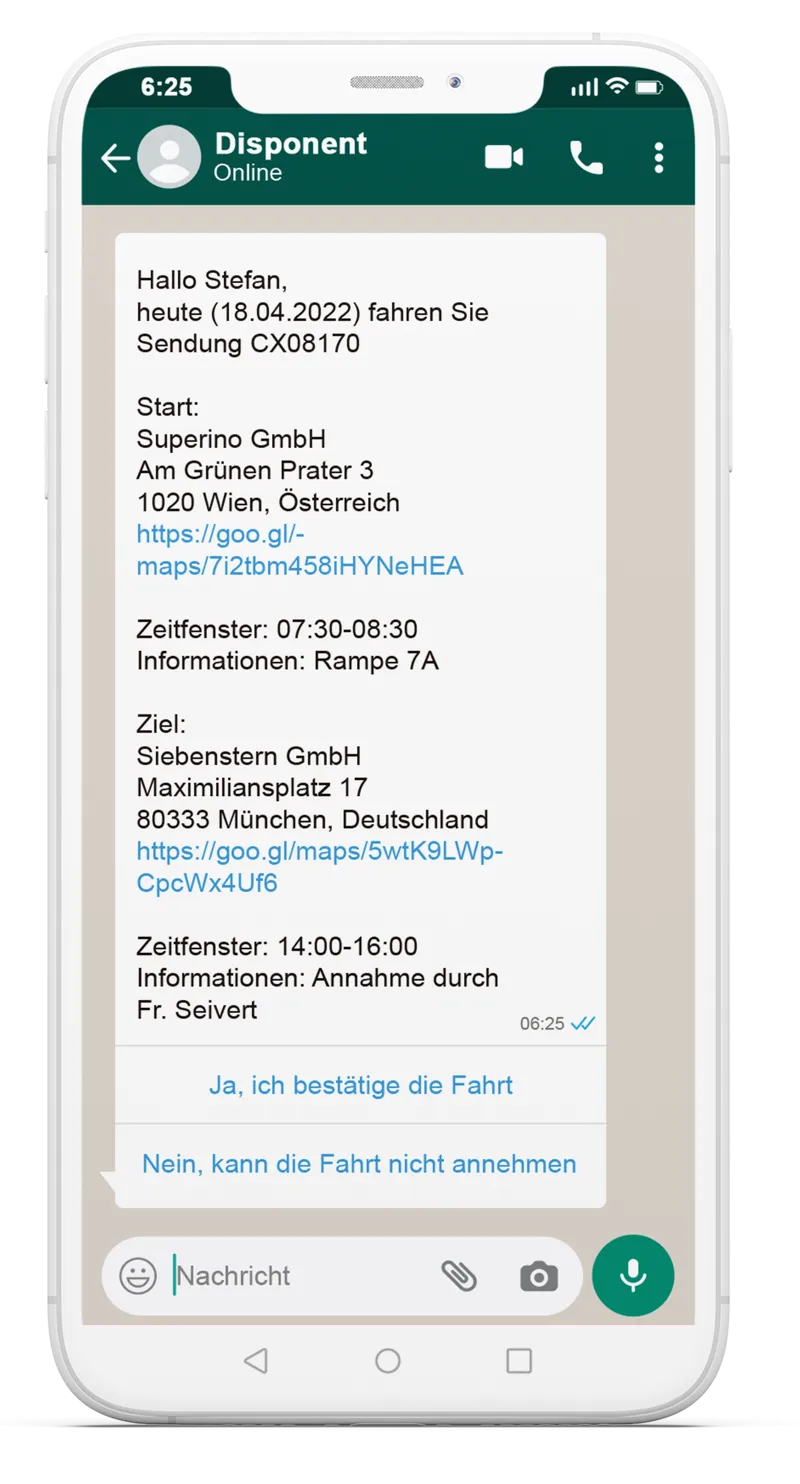
The tour went out as a message to the driver, with origin, destination, time windows and notes on unloading. Accepting or declining was a single tap in the chat, and the answer came back as a status on the order.
Anyone who did want an integration could connect Heylog to TMS, telematics and third-party systems through a REST API.
AI-based workflows
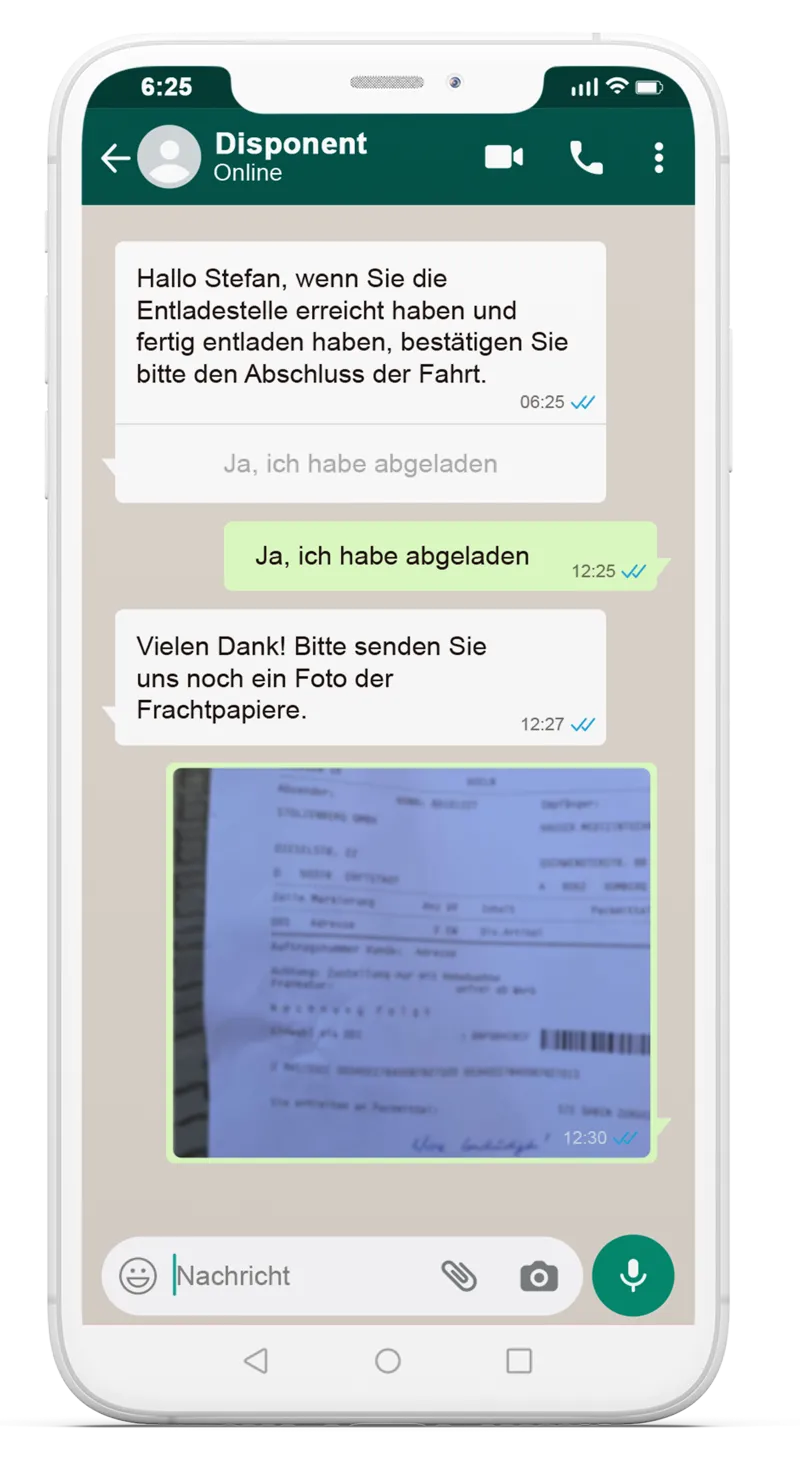
AI-based workflows played a central role at Heylog. A chat on its own only provides the communication, but on top of it the dispatch desks at transport companies could handle recurring tasks simply and effectively. That included reading documents such as freight papers with AI.
Beyond that, AI made it possible to translate freely worded messages across more than 13 languages. Taken together: a photo of the freight papers became a document attached to the right order, a “yes, I have unloaded” became a status that had been set, and message templates and automated messages meant less time spent on the same tasks.
Outcomes
- From zero to first revenue in under six months. Product, team and sales structures grew in parallel.
- €3.8 million in funding. From partners who know the market: Schmitz Cargobull, LKW WALTER and 9.5 Ventures.
- A team of 11 at full strength. International, headquartered in Vienna, Austria.
- Around 25% less work per order. That was the promise to the dispatch desk that Heylog was sold on.
- A data-protection-compliant solution. Application and data servers in the EU, with GDPR compliance documented.
Heylog after the market-entry product
Heylog is a joint project of LKW WALTER, Schmitz Cargobull and 9.5 Ventures. The company is now led by new management, which has gradually taken it in a new direction. What is described here is the build-up phase we were responsible for.
More on this topic: AI in logistics